THE PRODUCT:
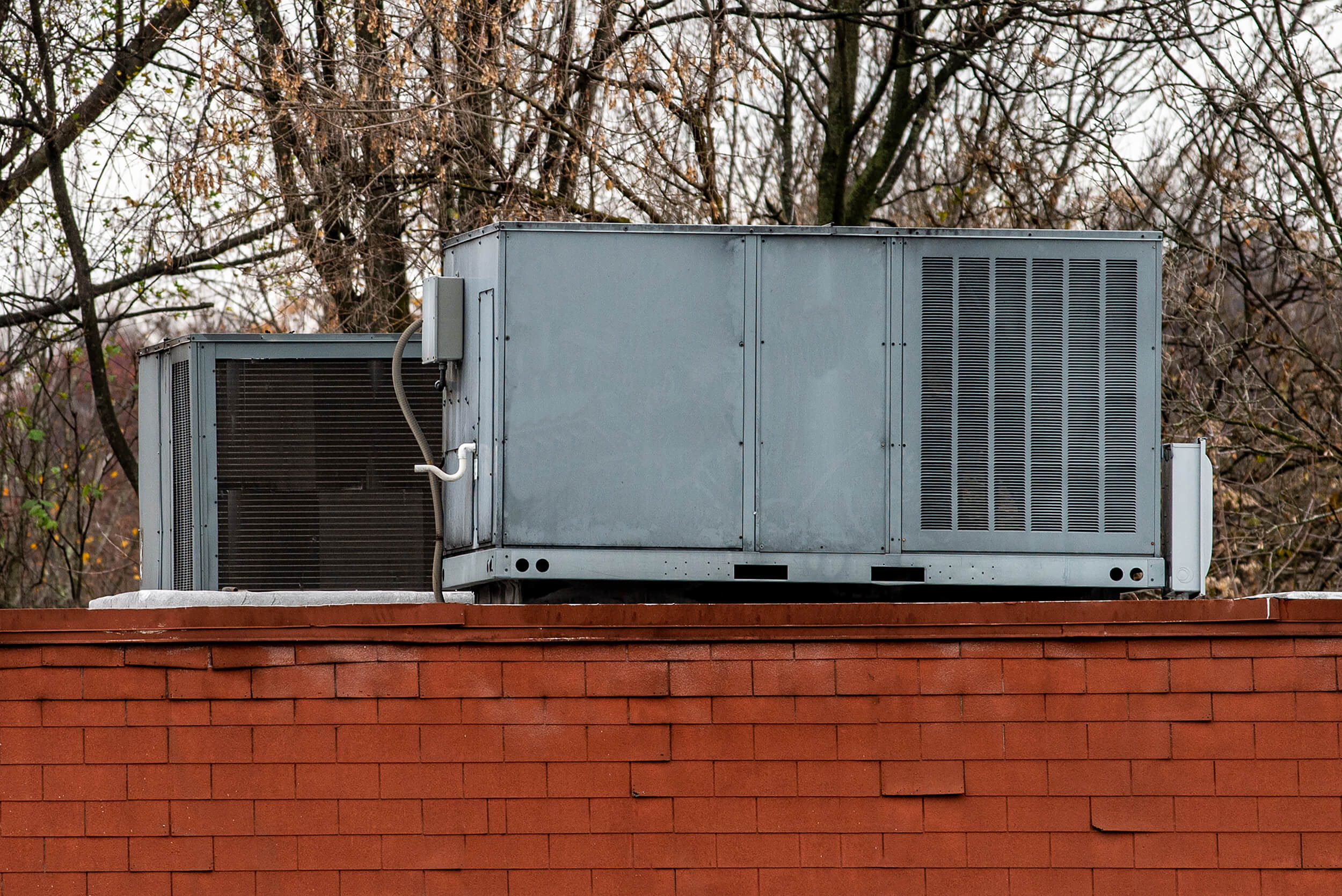
Air-cooled commercial unitary air conditioners (CUACs) and heat pumps (CUHPs), often called roof-top units (RTUs), are typically used to cool small- to mid-sized commercial buildings such as schools, restaurants, big-box stores, and small office buildings. CUACs may contain a gas heating section.
CUACs/CUHPs are a category of ASHRAE equipment.
THE STANDARD:
The current standards for CUACs and CUHPs took effect in 2023. The standards were based on a consensus agreement between energy efficiency advocates and manufacturers, which recommended a two-tier compliance regime. The first tier of the standards took effect on January 1, 2018, with the second, higher, tier taking effect on January 1, 2023. The current standards (i.e., Tier 2) require minimum IEER levels of 12.3 to 14.8 depending on equipment type and capacity. The standards also require minimum heating COP levels of 3.2 to 3.4 for heat pumps.
In 2024, DOE finalized amended standards for CUACs and CUHPs based on a consensus agreement, with compliance required starting January 1, 2029. The standards will reduce the energy use of small, large, and very large equipment by about 23%, 11%, and 8%, respectively, relative to the current standards. The amended standards are based on updated metrics for cooling efficiency (Integrated Ventilation, Economizing, and Cooling [IVEC]) and heating efficiency (Integrated Ventilation and Heating Efficiency [IVHE]). The new metrics reflect seasonal efficiency for both cooling and heating and better capture fan energy use.
**The cooling energy efficiency metric, integrated energy efficiency ratio (IEER) is a weighted calculation of mechanical cooling efficiencies at full-load (100%) and part-load (75%, 50%, and 25%) conditions expressed in Btu/Wh. The heating energy efficiency metric, the heating coefficient of performance (COP), is a ratio of the heating capacity at 47 °F to the power input expressed in W/W.
KEY FACTS:
Technology options for improving the efficiency of CUACs and HPs include variable speed compressors, compressor staging, larger and better heat exchangers, higher efficiency fan motors and fan blades, and improved expansion valves. Equipment on the market today achieves IEER levels as high as 26.