THE PRODUCT:
Cooking products include gas and electric cooking tops and ovens. A range includes both a cooking top and an oven.
THE STANDARD:
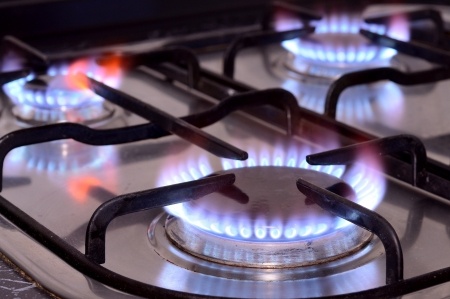
The current standards for gas cooking products took effect in 2012. The standard prohibits standing pilot lights in all gas cooking products whether or not they have an electrical cord.
In 2024, DOE adopted the first performance standards for electric and gas cooking tops. The 2024 final rule also established prescriptive requirements for electric and gas ovens, which prohibit the use of inefficient power supplies. The standards were based on a joint recommendation from manufacturers and efficiency advocates, and compliance will be required beginning in 2028.
KEY FACTS:
The efficiency of electric smooth cooking tops can be improved by using more efficient heating elements and by improving the efficiency of the power supply used to power the electronic controls, while gas cooking top efficiency can be improved by optimizing the burner and grate design. The efficiency of ovens can be improved by replacing inefficient linear power supplies with more efficient switch-mode power supplies and by adding convection mode capability.