Dehumidifiers

Photo: 

THE PRODUCT:

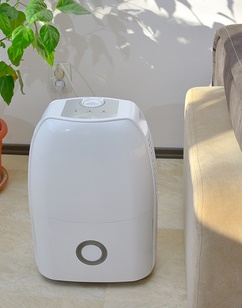
A dehumidifier collects water vapor from the air, decreasing the humidity of the surrounding area. DOE defines dehumidifiers as self-contained, electrically operated, and mechanically refrigerated encased assemblies consisting of: (1) a refrigerated surfarce (evaporator) that condenses moisture from the atmosphere; (2) a refrigerating system, including an electric motor; (3) an air-circulating fan; and (4) a means for collecting and disposing of the condensate.

THE STANDARD:

Efficiency standards for dehumidifiers were initially established in the Energy Policy Act of 2005. The law set standards in terms of liters of water condensed per kWh of energy consumed based on the unit's capacity (in pints/day), effective October 2007. For a 35-45 pint/day unit, the initial minimum standard was 1.3 liters/kWh. In spring 2007, appliance manfuacturers and efficiency advocates reached consensus on a revision to the standard that would set a performance level of 1.5 liters/kWh for equipment of 35-45 pint/day capacity. The consensus recommendations were incorporated into the Energy Independence and Security Act (EISA) of 2007. In December 2007, Congress enacted H.R. 6, requiring an increase in the efficiency of dehumidifiers manufactured on or after October 12, 2012. Varying by product capacity, dehumidifiers will be required to have an energy factor (liters/kWh) between 1.35 and 2.5.

KEY FACTS:

According to DOE estimates, the EISA 2007 dehumidifier standards will lower national energy usage by .17 quads, save between $300 and $700 million, and reduce CO2 emissions by 2.7 million metric tons over 30 years. ENERGY STAR estimates that an average baseline dehumidifier consumes about 1,000 kWh/year and has an energy cost of about $120/year to operate. Technology options for improving dehumidifier efficiency include the use of more-efficient refrigeration coils, compressors, and fans. and

Timeline

Federal Date State
Potential Effective Date of Updated Standard 2018
Updated DOE Standard Due 2015
2nd Federal Standard Effective 2012
1st Federal Standard Effective 2007
2nd Federal Standard Adopted (Congress) 2007
EPACT Initial Federal Legislation Enacted 2005
1st Federal Standard Adopted (Congress) 2005

Timeline reflects state standards from 2001 to present; federal standards from inception to present.

Appliance Standards Awareness Project - 16 Cohasset Street - Boston, MA 02131
info@standardsasap.org - Phone: 617.363.9101
Web Design by Triple Smart